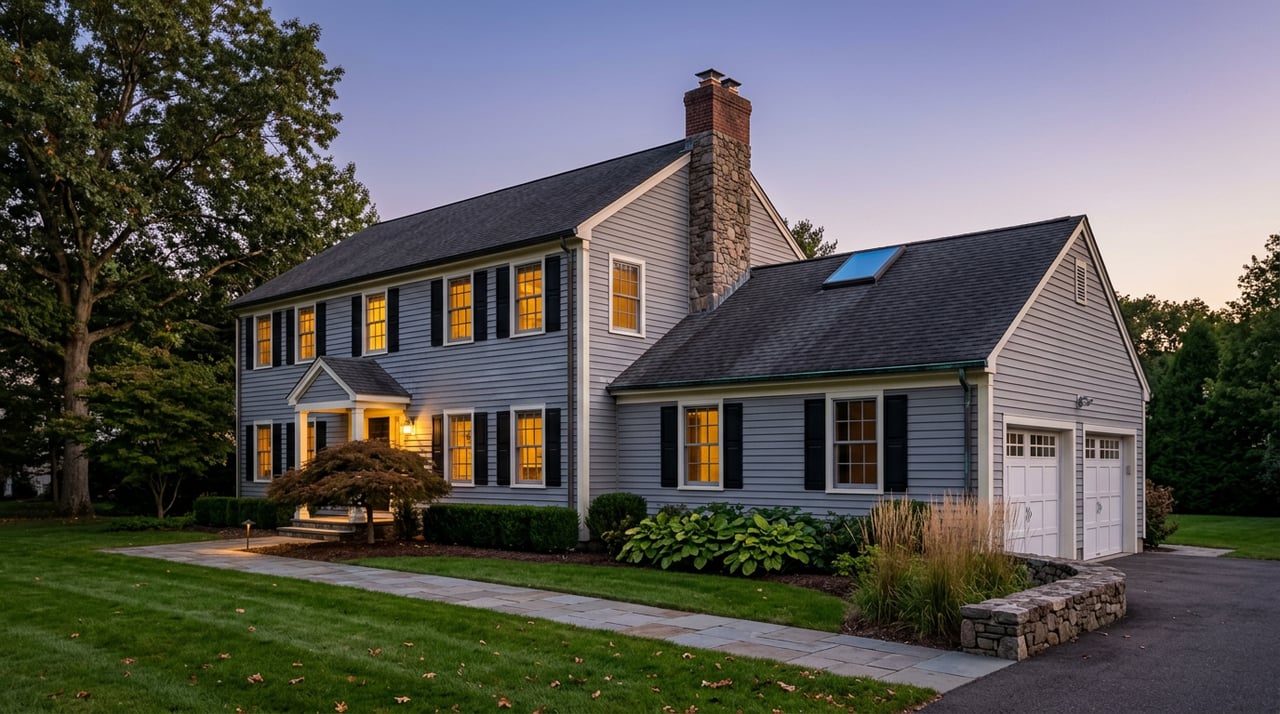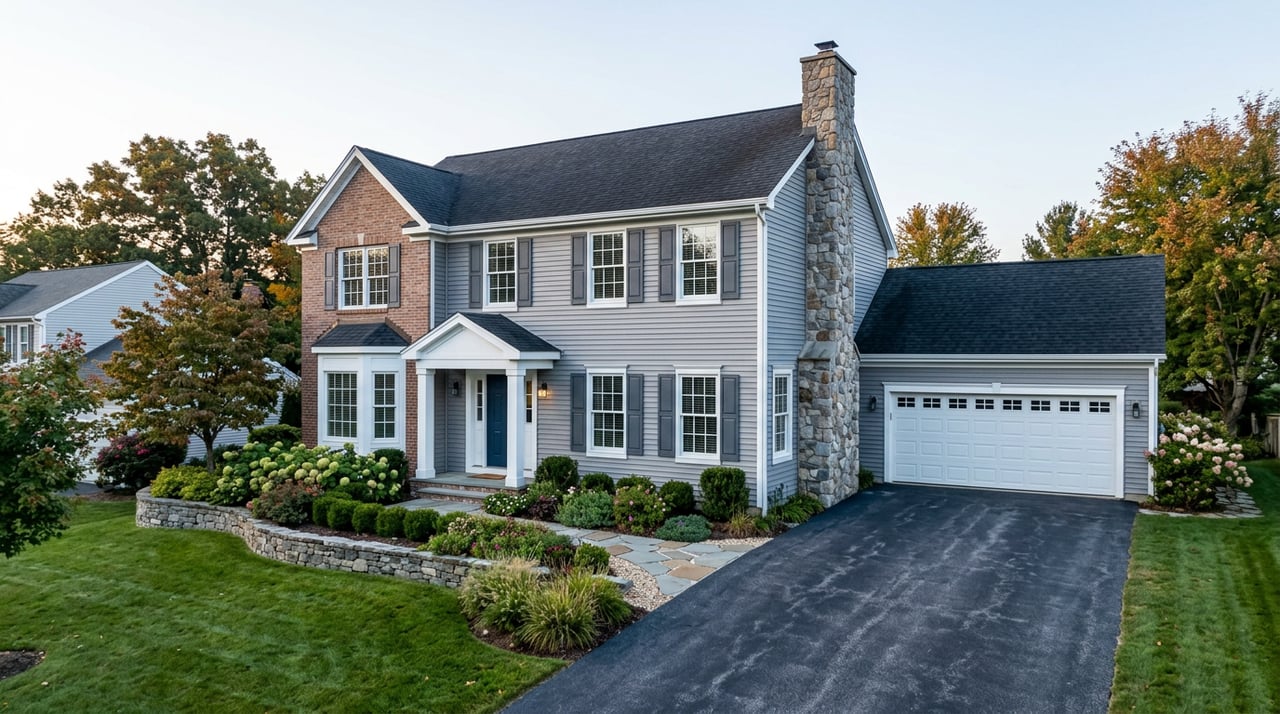
A buyer comparing a $2.2 million cottage in Beach Haven to a $580,000 colonial in Toms River might reasonably expect the property tax bill to scale with the price tag. It often doesn't. The gap has nothing to do with the tax rate printed on either town's budget and everything to do with how outdated the underlying assessment is.
That distinction matters more on Long Beach Island than almost anywhere else in Ocean County, and it's the kind of thing that shows up as a surprise months after closing rather than as a line item during the showing.
The Ratio Behind the Number
Every New Jersey municipality is supposed to assess property at, or close to, full market value. In practice, assessments drift as the market moves and reassessments lag behind. The state tracks that drift through something called a Director's Ratio, essentially a measure of how close a town's assessed values sit to what properties are actually selling for. New Jersey considers 85 percent or higher to be in compliance. Below that, and by a wide enough margin, a town becomes a candidate for a formal revaluation, the process that resets every assessment in town to current market value.
The most recent Chapter 123 certification from the state, covering the period ending October 1, 2024 and used to apply 2025 tax appeals and equalize the 2026 county tax burden, shows that 30 of Ocean County's 33 municipalities sit below that 85 percent threshold. That's the countywide backdrop. The barrier island is where the gap gets extreme.
Six Barrier Island Towns, One Shared Problem
Long Beach Island's six municipalities, Barnegat Light, Harvey Cedars, Surf City, Ship Bottom, Long Beach Township, and Beach Haven, all cluster in a narrow, and uniformly low, band between 53 and 73 percent. The two ends of that range are the clearest illustration of what's happening:
| Municipality | Director's Ratio |
|---|---|
| Long Beach Township (highest of the six) | 72.88% |
| Beach Haven | 53.84% |
| Barnegat Light | 53.74% |
Harvey Cedars, Surf City, and Ship Bottom fall somewhere in the middle of that band. Every one of the six sits below the state's compliance line. Long Beach Township, the largest of the six by geography and the most varied in housing stock, sits highest at just under 73 percent. Barnegat Light and Beach Haven, the island's northern and southern anchor towns, sit lowest, both hovering just above 53 percent. In plain terms, homes in those two towns are, on average, assessed at roughly half of what they'd actually sell for today.
Sandy Rebuilt the Houses. It Didn't Reset the Assessments.
The reason traces back to 2012. Hurricane Sandy displaced much of the island's original housing stock, and the rebuilds that followed came back larger, raised on new foundations, and finished to a higher standard than what they replaced. Each of those changes should have triggered a full reassessment. In many cases it triggered only a partial one, updating the physical description of the property without fully catching the assessment up to what the new structure would actually command on the open market.
Layer on nearly a decade of price appreciation since, and you get exactly the pattern the ratio data shows: assessed values that describe a market from years ago sitting underneath structures and sale prices that describe the market today.
Beach Haven's recent transaction history includes sales above $5 million, and both Beach Haven and Barnegat Light have seen sold-to-list price gaps under 1 percent in peak season, meaning buyers are paying close to full ask. None of that has yet translated into an assessment that reflects it. Neither town has been formally ordered into a revaluation. Both fit the profile of towns that are structurally due for one.
A low tax bill on a barrier island listing isn't a discount. It's a number waiting for the state to catch up to it.
What the Gap Actually Costs
Tax rate and assessment ratio work together, and buyers who only look at one get half the picture. Toms River, the county's largest mainland community, carries one of the lower effective tax rates in Ocean County, in the neighborhood of 1.55 to 1.65 percent, and its assessments sit closer to compliance than the barrier island's. Inland townships like Jackson run effective rates above 2.5 percent. On a $500,000 home, that difference between mainland towns alone can mean roughly $4,000 or more a year in carrying costs, before you ever get to the coast.
Ocean County's other barrier communities show what the stacked math looks like once flood coverage enters the picture. Lavallette, a separate barrier borough north of LBI on the Barnegat Peninsula, carries typical annual tax bills of $10,500 to $17,500, with premium oceanfront homes reaching $20,000 to $40,000, and flood insurance adding another $2,000 to $5,000 or more depending on elevation and flood zone. Seaside Heights, by comparison, carries a more moderate typical bill of roughly $6,920 to $10,380, still with flood insurance layered on top.
None of those current bills account for what happens if a town like Barnegat Light or Beach Haven gets ordered into revaluation. A reval doesn't necessarily raise the total tax levy a town collects, but it redistributes who pays what, and homes that have been under-assessed relative to their current market value are the ones that see the increase land on them directly.
The Pattern Runs Wider Than LBI
Long Beach Island isn't an isolated case. Berkeley Township, on the Ocean County mainland side of Barnegat Bay, is currently under a revaluation contract with Professional Property Appraisers for the 2027 tax year, one of the first towns the county tax board moved on. The bottom five ratios countywide, Seaside Heights at 53.03 percent, Barnegat Light at 53.74 percent, Beach Haven at 53.84 percent, Stafford Township at 55.89 percent, and Beachwood at 56.17 percent, are overwhelmingly coastal or bay-adjacent communities that saw the same post-Sandy rebuilding wave and the same rapid price growth since.
Stafford is worth a second look for a different reason. As the largest municipality in that bottom group, its townshipwide ratio blends very different pockets, from the Ocean Acres and Mill Creek sections to waterfront parcels, meaning the countywide average understates how much variation exists inside a single town's borders. A ratio number at the municipal level is a starting point for a conversation, not a substitute for looking at the specific street.
Set against that backdrop, Ocean County's overall average home value stood at $552,498 as of July 2026, up 4.7 percent over the prior year, and Toms River's median sale price over the three months ending May 2026 came in at $505,000, up 7.6 percent year over year. Those mainland numbers move in a fairly ordinary way. The barrier island's pricing, with January 2026 data putting the Long Beach Island median in the $1.8 million to $2.3 million range depending on the month, moves on its own track, largely disconnected from what the assessment rolls currently say those same homes are worth for tax purposes.
Questions Worth Asking Before You Write an Offer
If you're weighing a barrier island purchase against a mainland one, the current tax bill on the listing sheet is only useful if you also ask what's behind it:
- When was this municipality's Director's Ratio last certified, and where does it sit relative to the 85 percent compliance threshold?
- Has the town been ordered into a revaluation, or is one under contract, and for what tax year?
- Was this specific property rebuilt or substantially renovated after Sandy, and did that trigger a full reassessment or a partial one?
- What would the flood insurance premium add to the total annual carrying cost, separate from the property tax line?
- How does the effective tax rate here compare to a mainland town you're also considering, and does that gap offset or amplify the assessment risk?
None of these questions have a universal answer. They depend on the specific town, the specific street, and sometimes the specific house, which is exactly why they're worth asking someone who tracks this market rather than relying on the number a listing portal displays.
If you're weighing Ocean County's barrier island against its mainland communities, or trying to understand what a specific town's tax picture actually means for your budget, Beth Harding can walk through the comparison with you directly. Schedule your free consultation to get a clear read on what you'd actually be signing up for, assessment and all.