A single-family shopper and a townhouse shopper in Somerset County this fall are living in two different markets, even though every portal will hand them the same countywide median. The single-family buyer is competing for a shrinking pool of listings that sold at a median of $865,000 in July 2026, up 5.2 percent from a year earlier, with roughly 2.9 months of supply and homes moving in about 30 days. The townhouse and condo buyer is looking at a market with a median of $460,000 that same month, inventory that has grown by more than 30 percent year over year as of late August 2026, and sellers who are starting to negotiate. Neither one is looking at "the Somerset County market." They're each looking at a slice of it, and the county median is just the average of slices that are currently moving in opposite directions.
Three markets, one number
Somerset County's residential market splits cleanly into three segments that NJ Realtors track separately: single-family, townhouse-condo, and age-restricted adult communities. Each one has told a different story through 2026.
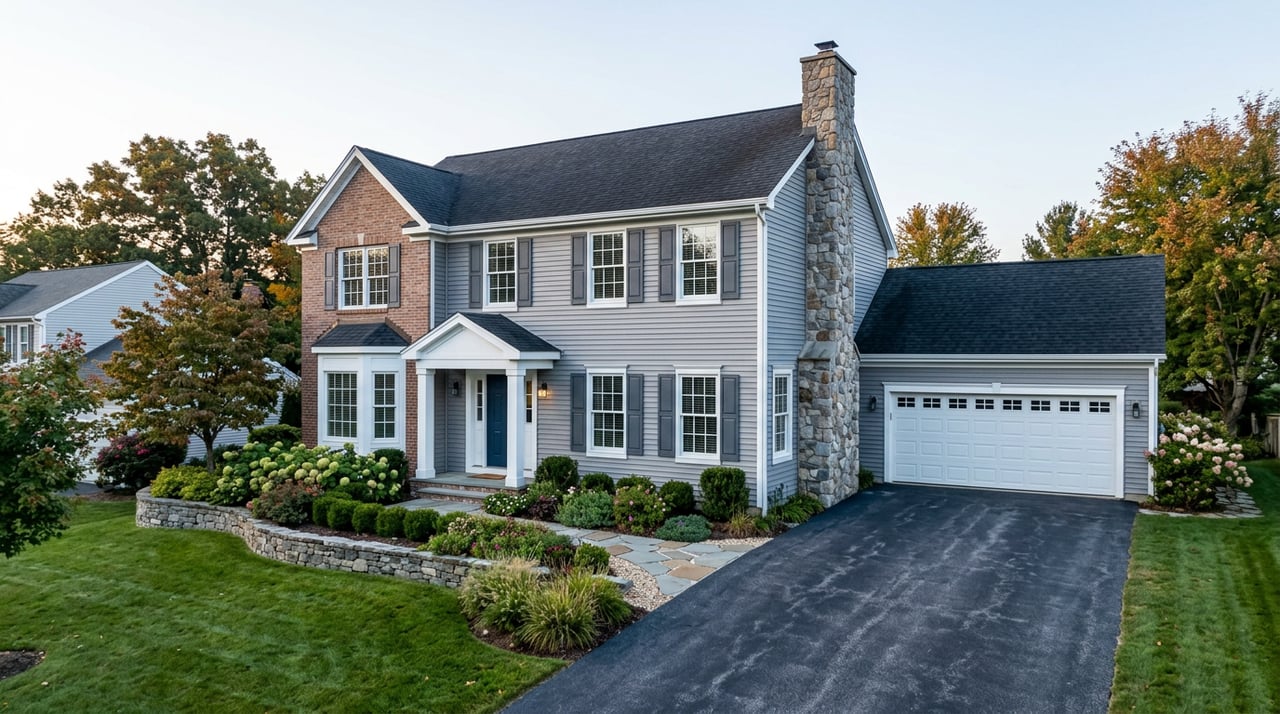
Single-family has stayed the tightest and the most expensive. July's data showed 277 new listings and 257 closed sales, with the median price climbing to $865,000. Supply sat at 2.9 months, up from 2.6 the prior month but still well under the four to five months most agents consider a balanced market.
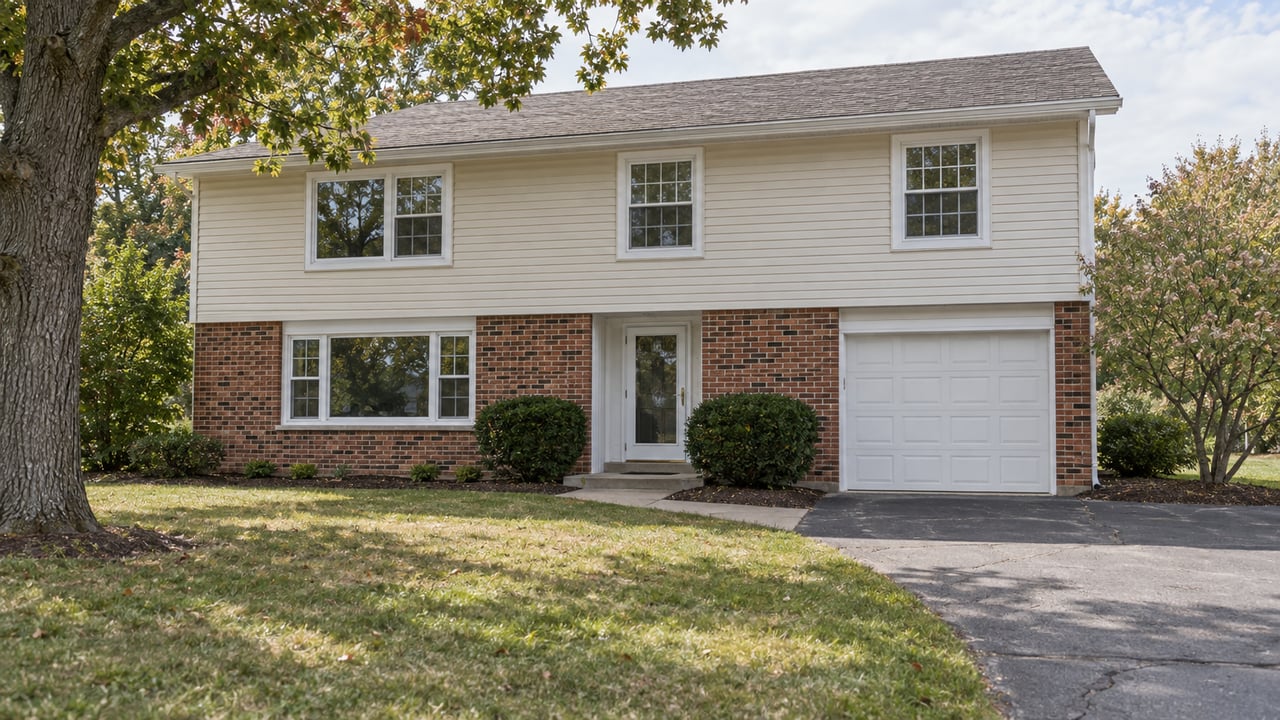
Townhouse-condo has loosened. July brought 138 new listings and 90 closed sales at a $460,000 median, and total condo inventory rose to 85 active listings. That's a smaller, cheaper market, and it's the one segment where a buyer staying in Somerset County but priced out of single-family homes is likely to find breathing room this fall.
Adult communities moved the most dramatically of all on the smallest sample. In May 2026, the median sale price in this segment jumped nearly 30 percent year over year to $662,500, even as the number of transactions fell and active supply tightened to 2.1 months. Days on market stretched from 27 to 39, which suggests buyers in this segment are getting pickier even while prices climb, a sign that the appreciation is concentrated in a narrow set of desirable properties rather than spread evenly across the segment.
Blend those three medians into one countywide number and you get something that describes none of them accurately. A buyer using the county median as a stand-in for "what a house costs here" is really looking at a weighted average of a tight $865,000 single-family market, a loosening $460,000 attached-home market, and a thin, volatile $662,500 age-restricted market.
What the split means for your budget
If your search is built around a specific price point rather than a specific property type, the segment you land in changes the experience more than the town does. A buyer with roughly $650,000 to spend who insists on a single-family home is shopping below the segment median in a market where sellers are still receiving strong offers and supply is under three months. The same buyer willing to consider a townhouse or condo is shopping above that segment's median, with inventory that's grown sharply and sellers who have more incentive to negotiate on price or closing costs.
This is also why comparing Somerset County to a neighboring county purely on "median home price" can mislead. If one county's inventory mix skews more heavily toward single-family and another's skews toward attached housing, the medians will diverge for reasons that have nothing to do with which county is more expensive to live in. The type of home being counted matters as much as the town it sits in.
The number the median doesn't include
Home price is only the entry cost. What a buyer actually pays every year afterward depends on a second number the median never touches: the local property tax rate, and that number varies enormously within Somerset County regardless of what a home costs to buy.
New Jersey publishes two different tax rates for every municipality, and the distinction matters. The general tax rate is what actually gets multiplied against your assessed value to produce your bill. The effective tax rate is a comparison tool that restates every town's burden as if all properties were assessed at 100 percent of market value, which is useful for comparing towns but should never be used to estimate an actual bill. Somerset County's own effective rates, by one tax-data source, range from about 1.27 percent in Bedminster to 4.36 percent in North Plainfield. A separate tax-mapping source put Bedminster's average 2025 tax bill at $5,806, the lowest in the county, against $18,279 in Watchung Borough, the highest. However the specific towns rank, the pattern holds: a fourteen or fifteen-thousand-dollar annual gap can separate two homes that might sell for the same price.
Somerset County's countywide average effective rate runs close to 2 percent, which is lower than New Jersey's statewide average of roughly 2.46 percent. That framing matters for a buyer coming from a higher-tax county, but it can also create a false sense of security, since the county average sits well above what a buyer would actually owe in Bedminster and well below what they'd owe in North Plainfield.
Why two similarly priced homes can carry different bills
New Jersey caps how much a town's total property tax levy can grow each year at 2 percent, with limited exceptions. That cap protects the town's overall revenue growth, not any individual bill. When a town completes a revaluation or reassessment, the same capped levy gets redivided across newly updated property values, and a home that appreciated faster than the town's average takes on a larger share of that levy even if the total collected barely moved. That's the mechanism behind headline-grabbing tax jumps that have nothing to do with a town spending more money.
Some Somerset County towns update assessments every year, and others let years pass between corrections. The county's own tax board lists, for the 2026 cycle, which towns fall into which group. Bedminster Township, Bernards Township, Bernardsville Borough, Bound Brook Borough, Branchburg Township, Bridgewater Township, Far Hills Borough, Franklin Township, Green Brook Township, Hillsborough Township, Manville Borough, Millstone Borough, Peapack-Gladstone Borough, Rocky Hill Borough, Warren Township, and Watchung Borough are all reassessment or revaluation districts, which pushed their 2026 appeal deadline to May 1. Montgomery Township, North Plainfield Borough, Raritan Borough, Somerville Borough, and South Bound Brook Borough are not on that cycle, and their deadline fell on April 1.
Bernards Township shows what an annual reassessment town actually looks like in practice. Its assessor's office inspects about 20 percent of the township's properties every year on a five-year rotation, so every home gets a fresh look at least once every five years rather than sitting on an old valuation for a decade or more. That steady correction is part of why a town on this kind of cycle tends to see smaller, more predictable year-to-year shifts in individual bills, compared to a town where the correction only happens in occasional, larger jumps.
For a buyer comparing two towns with similar list prices, this is the detail worth asking about before making an offer, not after closing. A home in a town that revalued recently is being taxed against a number that reflects something close to its current market value. A home in a town that hasn't revalued in years may be carrying an assessment that under or overstates its worth, and either direction changes what the buyer actually owes relative to the sale price.
Reading the county the way it actually behaves
None of this changes what Somerset County costs on average. It changes what that average is made of. A single-family home, a townhouse, and an age-restricted property in this county aren't three prices on the same curve right now, they're three markets that happen to share a county line. And two homes listed at the same price in two different towns can arrive at closing with tax bills thousands of dollars apart, for reasons that trace back to when each town last corrected its assessments rather than anything about the homes themselves.
Frequently asked questions
Does a lower property tax rate always mean a better deal? Not on its own. A low effective rate paired with a town that hasn't revalued in years can mean the assessment is due for a correction, which would raise future bills even if the rate itself doesn't change.
How do I find the current tax rate for a specific Somerset County town before I make an offer? The New Jersey Division of Taxation publishes general and effective tax rates by county and municipality, and individual township assessor offices, like Bernards Township's, post their own assessment data and reassessment schedules directly.
If a town is mid-revaluation, should I wait until it finishes before buying there? Not necessarily. A revaluation redistributes an existing levy across updated values, it doesn't automatically raise or lower what the town collects overall. The more useful question is how your specific home's projected assessment compares to its purchase price, which a current listing agent or the township assessor's office can help you work through.
If you're weighing a single-family home against a townhouse in Somerset County, or trying to figure out what a specific town's tax history means for your monthly budget, that's exactly the kind of local comparison Beth Harding works through with buyers every week. Schedule your free consultation to get a clear read on the segment and the town that actually fit your numbers.