If you picture waterfront living as one long beach town, Middlesex County may surprise you. Here, living by the water is usually less about an oceanfront strip and more about river views, bayfront parks, marinas, trails, and neighborhoods shaped by both history and redevelopment. If you are thinking about buying near the water in this part of New Jersey, it helps to know what daily life really looks like before you fall in love with the view. Let’s dive in.
Where waterfront living happens
Middlesex County’s water-adjacent communities are concentrated along the Raritan River, Raritan Bay, Arthur Kill, South River, and Woodbridge Creek. County planning materials group Carteret, Old Bridge, Perth Amboy, Sayreville, South Amboy, South River, and Woodbridge together as key shoreline municipalities with shared flood-risk concerns.
That means waterfront and riverfront living is not limited to one town or one housing style. Instead, you will find a mix of urban waterfront areas, established residential neighborhoods, public parks, and redevelopment zones spread across several municipalities.
Perth Amboy stands out
Perth Amboy is one of the county’s most distinctly waterfront-focused cities. County resilience materials note that it sits at the mouth of the Raritan River and is surrounded on three sides by water, which gives it a strong maritime setting that feels different from inland suburban neighborhoods.
The city is also seeing continued waterfront redevelopment. In January 2026, Perth Amboy announced the Sea Gate waterfront redevelopment plan, which includes 602 housing units along the Arthur Kill, plus a public esplanade, amenities, and brownfield remediation.
South Amboy offers bayfront variety
South Amboy is another major waterfront market in Middlesex County. City materials describe it as a Raritan Bay waterfront community with active redevelopment interest and a range of housing options near the bayfront.
That variety matters if you are shopping here. South Amboy’s redevelopment materials specifically mention established single-family neighborhoods, waterfront complexes, townhouses, and rental opportunities, which can create very different ownership experiences from one block to the next.
Other notable water-access areas
Not every waterfront lifestyle in Middlesex County is centered on a home directly on the bay. Some of the strongest lifestyle draws come from access to parks, riverfront paths, and public spaces.
Key examples include:
- Old Bridge Waterfront Park on 71 acres along Raritan Bay
- New Brunswick Landing, which connects riverfront paths and the D&R Canal Towpath to downtown New Brunswick
- Donaldson Park in Highland Park along the Raritan River
- Raritan Bay Waterfront Park, known for wide views and wetland acreage
What daily life feels like
For many buyers, the biggest appeal is not just the water itself. It is the way the water shapes your routine, from evening walks and skyline views to kayak launches and access to downtown shops or restaurants.
In Middlesex County, that lifestyle often feels active and connected. You are more likely to enjoy a boardwalk, marina, or trail network than a private stretch of sandy beach.
Parks and public access are a big draw
Public access plays a major role in the waterfront experience here. Raritan Bay Waterfront Park spans 114 acres and includes 86 acres of wetlands, with views that can reach the New York skyline.
Old Bridge Waterfront Park adds even more of that everyday-use appeal. It includes a 1.3-mile boardwalk, scenic overlooks, and pedestrian access to nearby stores, bait shops, and restaurants.
Recreation is part of the lifestyle
The county’s parks and waterfront areas support a range of outdoor activities. Depending on the location, you may find fishing access, boat launches, kayak access, or walking and biking routes along the water.
For example:
- Donaldson Park includes a boat dock and launch
- Old Bridge Waterfront Park offers kayak access
- New Brunswick Landing provides river access and links to the D&R Canal Towpath
If you enjoy fishing, there is one practical detail to know. Middlesex County notes that freshwater fishing in county parks requires a New Jersey state fishing license and trout stamp where applicable.
Walkability can vary by location
One of the biggest differences between waterfront communities in Middlesex County is how connected they feel to surrounding amenities. In some places, the water is closely tied to downtown activity, while in others it feels more park-oriented or residential.
At Perth Amboy’s Harborside Marina, the city notes that restaurants and downtown shopping are within walking distance. In New Brunswick, riverfront paths at New Brunswick Landing connect to the commercial core in about a five- to seven-minute walk, which creates a very different experience from a quieter shoreline neighborhood.
What homes near the water look like
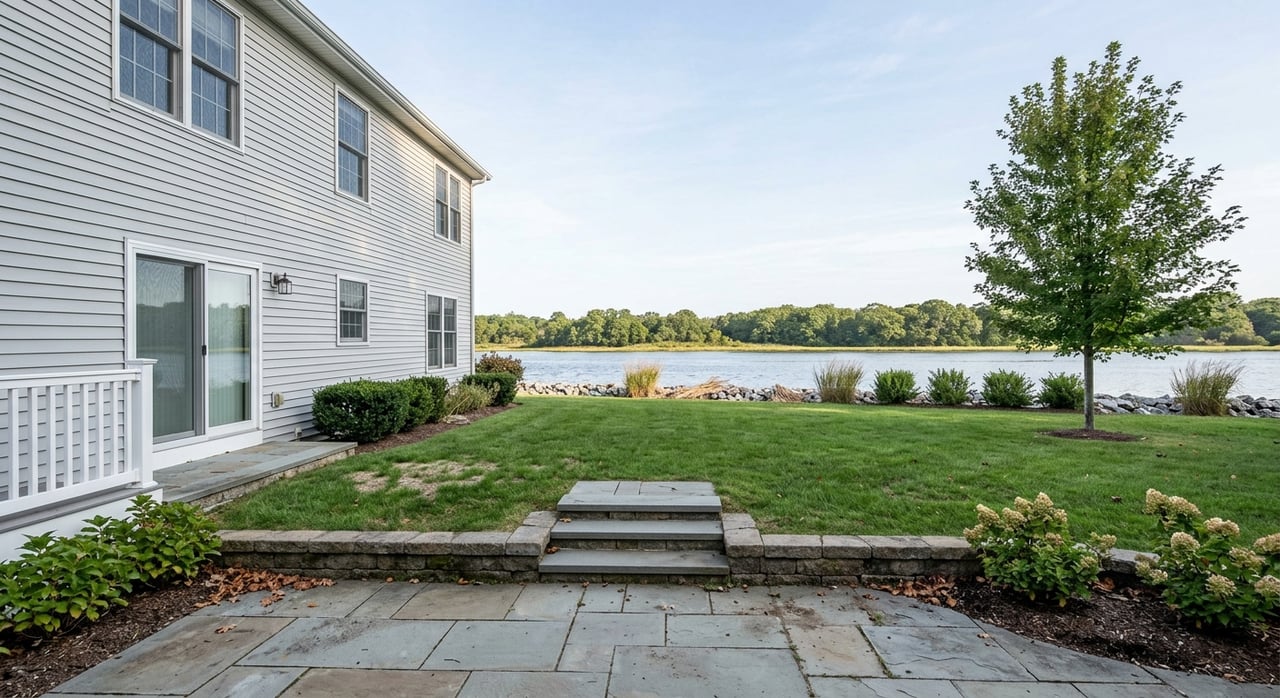
Waterfront and riverfront housing in Middlesex County is not one-size-fits-all. You may see newer multi-family development, older established homes, townhouses, rental communities, and housing tied to marina or redevelopment settings.
That mix can be exciting, but it also means you need to compare homes carefully. Two properties with similar views may come with very different rules, costs, and maintenance responsibilities.
Expect housing variety
South Amboy is a good example of this range. City materials point to single-family homes, waterfront complexes, townhouses, and rentals near the bayfront, showing that buyers can find more than one entry point into the market.
Perth Amboy reflects another side of the story. The Sea Gate redevelopment adds a large planned residential component on former industrial land, which shows how some shoreline areas are evolving through new construction and public-private investment.
Some shoreline areas are still changing
Parts of the county’s waterfront are still in transition. County resilience materials explain that portions of Perth Amboy’s Arthur Kill shoreline were once dominated by heavy industry, and some of those areas have since been reclaimed for recreation and public access while historic maritime assets remain.
That gives certain waterfront areas a different feel than a resort market. You may see a blend of legacy industrial character, open space, marina activity, and new development happening side by side.
The practical side of buying near the water
A great view can be a major lifestyle upgrade, but waterfront buying also comes with extra due diligence. In Middlesex County, the biggest issues usually involve flood risk, insurance, shoreline maintenance, and nearby redevelopment activity.
These are not reasons to avoid the market. They are reasons to ask smart questions early.
Flood risk should be an early step
Flood risk is one of the most important things to research when you are considering a riverfront or waterfront property. FEMA maps Special Flood Hazard Areas on Flood Insurance Rate Maps, and properties in those areas with government-backed mortgages generally require flood insurance.
New Jersey also regulates development in flood-prone areas through NJDEP Flood Hazard Area rules. On top of that, NOAA notes that high-tide flooding can happen even without a major storm as sea level rises, which makes location-specific research especially important near the bay and tidal waterways.
Insurance and mitigation details matter
Before you get too far into the process, ask whether the property is in a mapped flood zone and request an insurance quote early. This helps you understand the true monthly cost of ownership before you make a final decision.
You should also ask whether the seller has an elevation certificate or any record of past mitigation work. Those details can help you better understand both present risk and future insurability.
Water-use questions are worth asking
If you plan to fish, crab, kayak, or spend a lot of time on the water, water-quality guidance matters too. NJDEP’s Fish Smart, Eat Smart materials advise checking the specific water body and species before eating fish or crabs caught in New Jersey waters.
That is especially relevant in this region because NJDEP advisory materials specifically reference the Raritan Bay watershed in the history of state fish advisories. For a buyer who sees shoreline recreation as a big part of the lifestyle, this is useful practical information.
Redevelopment can shape your experience
Many shoreline areas in Middlesex County are active redevelopment corridors. That can be a positive if you value public improvements, new housing, and growing waterfront activity, but it can also affect what you live next to in the near term.
For example, Perth Amboy’s Sea Gate plan includes brownfield remediation, and the county’s broader resilience planning effort is focused on reducing flood risk across the Raritan River and Bay region. That makes it wise to ask about nearby cleanup projects, infrastructure work, drainage improvements, and future construction.
Smart questions to ask before you buy
If you are serious about waterfront or riverfront living in Middlesex County, go beyond the listing photos. A strong home search here should include questions about the property, the shoreline setting, and the surrounding area’s long-term plans.
Start with these:
- Is the property in a FEMA Special Flood Hazard Area?
- Will the lender require flood insurance?
- Is there an elevation certificate or proof of mitigation?
- Who maintains any bulkhead, seawall, marina, or shared shoreline access?
- Are there active redevelopment, remediation, or infrastructure projects nearby?
- If you plan to fish, what are the current NJDEP advisories for that water body?
- How does this home’s ownership setup differ from nearby properties with similar views?
Why local guidance matters here
In a waterfront market like Middlesex County, lifestyle and logistics are closely connected. The right home is not just about the view. It is about understanding the difference between a bayfront complex, a river-adjacent neighborhood, a redevelopment area, and a home near a park or marina.
That is where local, hands-on guidance can make a real difference. When you compare properties with a clear eye on flood considerations, access, housing type, and future area plans, you are far more likely to make a confident move.
If you are exploring waterfront or riverfront homes in Middlesex County, Beth Harding can help you navigate the local market with a practical, consultative approach.
FAQs
What is waterfront living like in Middlesex County, New Jersey?
- Waterfront living in Middlesex County is usually centered on river and bay access, parks, marinas, trails, and walkable waterfront areas rather than a continuous ocean-beach setting.
Which Middlesex County towns have waterfront or riverfront areas?
- Key shoreline and riverfront municipalities include Carteret, Old Bridge, Perth Amboy, Sayreville, South Amboy, South River, and Woodbridge, with additional water-oriented access points in places like New Brunswick and Highland Park.
Is Perth Amboy a major waterfront market in Middlesex County?
- Yes. Perth Amboy is one of the county’s most waterfront-focused cities, with water on three sides and ongoing redevelopment along the Arthur Kill.
What types of homes can you find near the water in Middlesex County?
- Buyers may find single-family homes, waterfront complexes, townhouses, rental communities, and newer redevelopment projects, depending on the town and exact location.
What should buyers check before purchasing a waterfront home in Middlesex County?
- Buyers should verify flood-zone status, ask about flood insurance requirements, review any elevation certificate or mitigation history, confirm shoreline maintenance responsibilities, and ask about nearby redevelopment or remediation projects.
Can you fish or kayak near Middlesex County waterfront areas?
- Yes. Several county parks and waterfront access points support activities like fishing, boating, and kayaking, though freshwater fishing in county parks requires a New Jersey state license and trout stamp where applicable.